🩰 The Sweetest White Rabbit: Reimagining a Classic Ballet for the 21st Century
By Phil Chan
As a dancer, The Nutcracker was always my favorite ballet to perform. I knew that there was always someone in the audience experiencing ballet and falling in love with it for the first time. For those of us passionate about ballet thriving for a diverse 21st-century audience, the question often is, “How do we bring more people into our world?”
Confronting “Yellowface” in a Holiday Masterpiece
In 2017, I was invited by Peter Martins, then-Artistic Director of New York City Ballet, to discuss the problematic depictions of non-European cultures in the second act of Balanchine’s holiday masterpiece The Nutcracker. This is the act where dancers perform choreography inspired by delicious treats from different cultures.
Balanchine’s caricatured depiction of Chinese culture, which had been a part of the production since the 1950s, felt incongruent with the mission to share the ballet with more people. With features like elongated eyes, Fu Manchu mustaches, painted yellow faces, and rice paddy hats, this was surely not the best way to show “Chinese” to an increasingly diverse audience.
Following our conversation, where I suggested subtle changes to the make-up, costuming, and choreography, I launched Final Bow for Yellowface (www.yellowface.org). The simple pledge was that we would no longer use caricatured stereotypes of Asian people on our stages (“Yellowface”). Today, almost every major American ballet company has signed on.
What Else Could It Be? 🤔
The challenge is NOT to cancel the choreography, but to find new and better ways to represent Chinese heritage. My favorite prompt when faced with this creative challenge is, “What Else Could It Be?”
We needed to tap into that creative, playful thinking—like how a pen in childhood pretend-play could be a magic wand, a rocket ship, or a lightsaber—when working to reimagine the “Chinese Tea” divertissement.
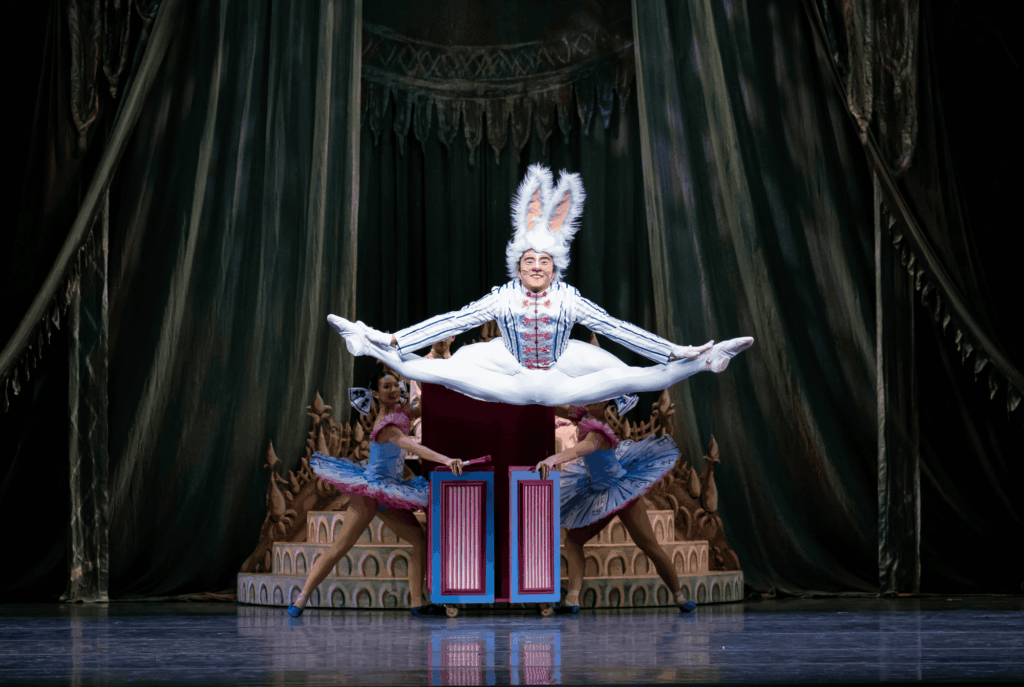
The pastel sets and overall confectionary look of the Oregon Ballet Theater’s production required a congruent symbol from Chinese culture that was playful, fun, and respectful.
The Perfect Symbol: The White Rabbit 🐇
Recalling my own childhood in Hong Kong, I thought of one of my favorite treats: White Rabbit candies. These are milky, chewy nougat covered in edible rice paper, wrapped in graphic red, white, and blue paper. This seemed like the perfect representation.
- In Chinese culture, white rabbits are a symbol of longevity, elegance, mercy, and beauty.
- They are considered one of the luckiest animals in the zodiac.
- With its big split jumps and spritely hops around the stage, a rabbit was the perfect animal to execute the playful Balanchine choreography.
Honoring the Tradition
We also wanted to honor the Balanchine tradition while reimagining this divertissement. A charming detail about the original costume designer, Barbara Karinska, was that she loved to sew the word “Balanchine” somewhere in the costumes as an easter egg.
In redesigning the costumes for “Tea,” OBT costume designer Emma Kingsbury makes a similar nod, sewing “巴兰钦” (“Balanchine” in Chinese) into the design of the tutus.
I worried that some people who didn’t grow up eating White Rabbits might not get why this is a stand-in for Chinese culture. However, this is an opportunity to learn about real Chinese heritage—culture, after all, is meant to be shared. Maybe pick up some White Rabbit candies next time you are at the Asian grocery store!
Alongside the new Turkish Delight variation as a reimagining of “Arabian,” I hope you find a new magic in the White Rabbit variation while still being able to appreciate the original and timeless Balanchine masterpiece.