As the dust settles on our favorite fairytale ballet, Christopher Stowell’s The Sleeping Beauty, we caught up with our Aurora’s post-debut to chat in-depth about what it means to dance one of the biggest roles in ballet:

Headshots by Christopher Peddecord
Q: What does it mean to you to get to dance the role of Aurora? How did you feel when you first learned that you would be dancing this role on stage?
Nash: I felt honored, I honestly never thought I would get an opportunity to work on this role, Aurora has always felt untouchable, but I was very excited and a little scared to get started!
Ochoa: Aurora is special to me because I had the opportunity to perform her in Ballet Arizona Studio Company’s production of Sleeping Beauty when I was 15. When I first saw the casting, I was honored and humbled; this is my first principal role in a full-length ballet in my professional career. I remembered the visceral feeling of performing this ballet when I was a teenager and knew that I needed to step into the role with as much thought as intention as I could.
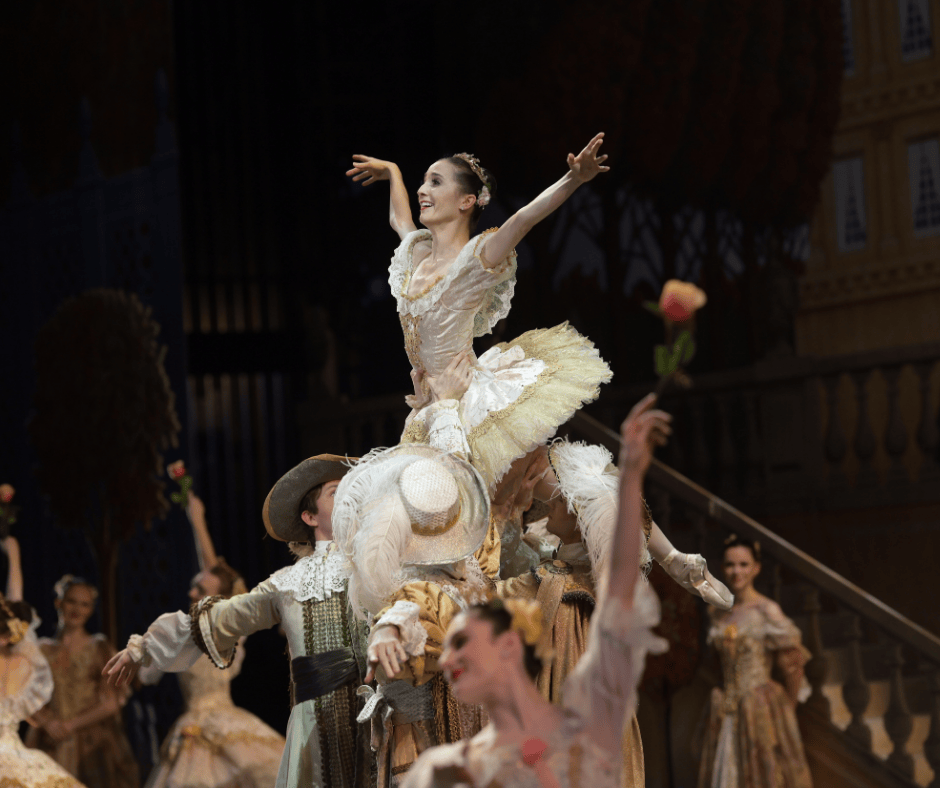
Carly Wheaton and OBT Dancers by Yi Yin
Q: This role requires incredible endurance; how did you prepare yourself emotionally/physically?
Ochoa: Physically, I really tried to keep up with my cross-training routine as best as I could after rehearsals. I weight train 3-5 times a week, and I knew I needed to maintain my strength and endurance for this ballet. Additionally, I added one weekend day dedicated to cardio and footwork drills for my quick twitch muscles and the other weekend day for yoga.
Mentally, I made sure to be eating healthy and getting a lot of rest when I could. I like to eliminate as many variables as possible when I’m preparing for a role because live performing already has a lot of variables that we as athletes can’t control. For me, that’s dialing in a specific diet that I know will adequately fuel me and settle well in my stomach. I also made sure to write down my corrections after rehearsals to keep track of feedback and apply notes. Emotionally, leaning on the support systems in my life like my family, friends, and therapist helped me so much when the nerves took over.
Nash: I think Nutcracker helped to get me in physical shape as well as cross training and just working on beauty in rehearsal. The emotional side came through detailed work in rehearsal as well as watching so many different aurora videos from Marinela to Sofiane. There’s so many beautiful videos out there.
Metzler: I feel like I’ve been mentally preparing for this role for years, definitely visualizing myself dancing it. Physically honing my craft has taken me a long way of course in studio hours, but the emotional preparation I think has happened in real life experiences. Having this opportunity requires immense focus in the studio, but also intentional work outside of rehearsals. Reviewing notes, watching footage of other Auroras on YouTube, and strength training were just a few things that helped me dive into this role.
Wheaton: I always felt my best if I had eaten and slept enough! Before an evening show, I would sit in compression boots for half an hour and eat a bowl of pasta. I’d also often see our amazing P.T., Nadia, for some soft-tissue work.
Q: What is the most memorable moment onstage or offstage for you from your Aurora debut?
Wheaton: I hold the memory of my first entrance in Act I, at the top of the stairs, very close. It felt beautiful to see so many friend’s faces already inside the story, so present and supportive. I remember feeling excited to join them!
Metzler: Rose adagio—the music and choreography are so iconic. Felt surreal to perform with live orchestra.
Ochoa: Honestly, every moment was pure joy and amazing experience for me out there. A few standout moments were in the pantomime right before the Rose Adagio begins. This moment can be scary because Aurora is about to execute some of the most challenging and iconic choreography. In that moment when I was onstage, I remember feeling the spotlight on my face and really looking at the dancer playing the King and feeling what Aurora must have felt hearing those words for the first time. Instead of thinking ahead to the steps, I felt truly in the moment and present. It was special to feel that calm of the present moment rush over me and that’s when I knew everything was going to go well because I was able to breathe and relax into the moment. The other memorable moment for me was during my third act variation. This was the feeling when you’re so close to the finish line, I was trying to savor every remaining moment. I’ve been following the Olympics and was thinking about what Alysa Liu said about her gold medal winning performance; that she was trying to connect with the audience and show off her gold dress, and Aurora’s act 3 dress is even gold! I was thinking about her and I also allowed myself to tell a little bit of my own story in that moment.
Nash: There’s nothing like the feeling of finishing Act 1. I can imagine it might be like finishing a marathon. Surprisingly, it never got easier, but the more you do it, the more you gain confidence in what you can do when you’re that tired!
Q: What advice would you give to other dancers aspiring to this role?
Nash: Trust your technique and that the process will take you exactly where you need to be by the time you get on stage. There will be hard days and that’s just a part of the process.
Ochoa: Try and shift into the performing mindset as soon as you can in rehearsals. Since there is so much choreography Aurora dances, I tried to use the studio rehearsals to start fully acting and projecting so that I could start to know what it was going to feel like to perform. Treat your body well and treat your mind even better. You’re chosen for a reason, trust in the work you’ve put in and tell her story to the audience, you got this!!
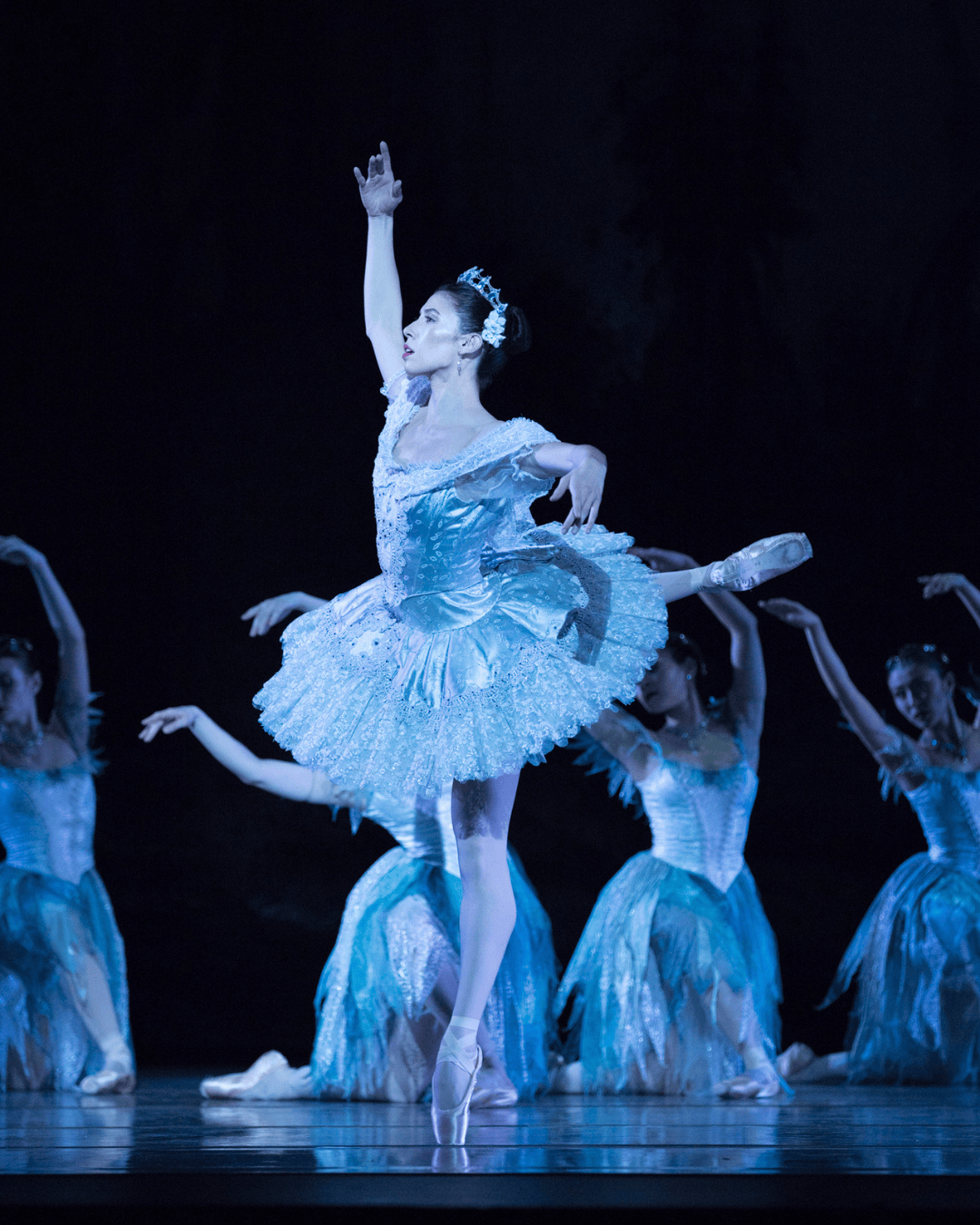
Charlotte Nash and OBT Dancers by Blaine Truitt Covert
Q: Did you learn anything about yourself as an artist throughout this process?
Metzler: It’s important to find the quiet moments within the steps. Not everything needs to be the “biggest”, or have full power. Rather, I’ve found throughout this process how to present texture and depth by making the most out of “little” moments.
Ochoa: When the nerves started to take over, I reminded myself that dancing is in service to the audience. We as artists can get caught up in the pursuit of tangible achievements — a certain number of pirouettes, or a clean execution of a jump, but what’s truly important is the audiences’ experience. Telling a story is the most important part, in my opinion, and that releases some of the pressure I was holding on myself. All I need to do as a dancer is tell the story to the audience and BE the character.
Nash: There’s something magical that happens when you feel so physically tired. You almost let go and it allows you to focus more on the character and ride the wave. It’s a beautiful feeling.
Q: Why do you think this story ballet has continued to captivate and connect with audiences year after year?
Ochoa: Sleeping beauty proves to us that love is more powerful than hate. Especially today, we need this message more than ever.
Nash: There’s nothing like watching The Sleeping Beauty. It’s witnessing the edge of what is possible in classical ballet. It feels like you’re there with each Aurora in every promenade, every balance… It’s like the entire audience is holding their breath. Pure magic!
Metzler: The score is everything and It’s a familiar fairytale ballet that showcases the epitome of classical technique. I think it can be exciting attending different shows to see how dancers and choreographers are able to share the same story but with their own interpretations.
See these incredible artists onstage in our upcoming vibrant mixed-rep production, Dani Rowe’s Princess and The Pea with Balanchine’s Rubies and Rowe’s UnSaid. April 3 – 11 at the Newmark Theatre.
Tickets at obt.org.
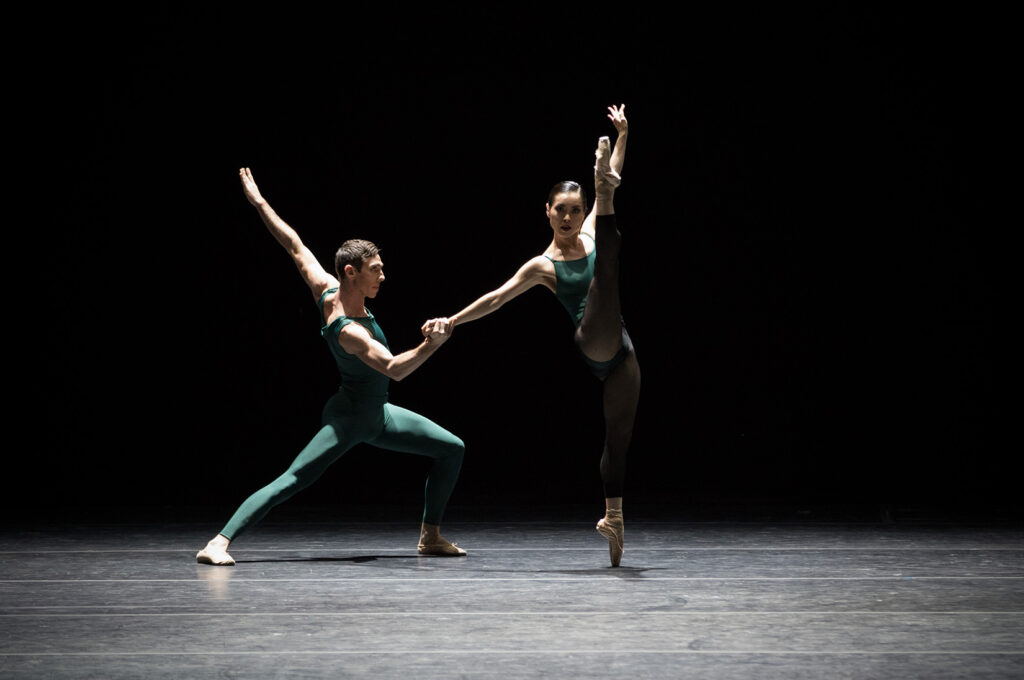
Top photo of Charlotte Nash and John-Paul Simoens by Blaine Truitt Covert.